I'm no longer updating this site but don't worry I'm still blogging.
You can read all my news from East Africa by clicking here
 Reading the article in Cork News about child sponsorship with World Vision this week made me think about my own sponsored child.
As a World Vision employee, it may seem strange that I’m a child sponsor, perhaps even self-serving to some. The truth is that sponsoring Davis in North Rukiga ADP in Uganda is one of the most rewarding and cost effective ways I can use my money to make a difference.
I know that only a fraction of my donation (22%) is used to cover the Irish office fundraising and programme quality costs and the vast majority goes to benefit Davis’ community.
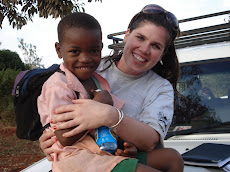
Unlike most charities, with World Vision I get to see exactly how Davis benefits from my donation and I have even visited him and met his family. The school that he goes to was seriously overcrowded with ramshackle buildings, but thanks to World Vision and partly thanks to my contribution, Davis’ school now has three classrooms. We occasionally write and he lets me know how his life is going and how World Vision is assisting him and his family.
My relationship with Davis is a great window into life in rural Africa and one of the most transparent and accountable ways my money can be used.
Reading the article in Cork News about child sponsorship with World Vision this week made me think about my own sponsored child.
As a World Vision employee, it may seem strange that I’m a child sponsor, perhaps even self-serving to some. The truth is that sponsoring Davis in North Rukiga ADP in Uganda is one of the most rewarding and cost effective ways I can use my money to make a difference.
I know that only a fraction of my donation (22%) is used to cover the Irish office fundraising and programme quality costs and the vast majority goes to benefit Davis’ community.
Unlike most charities, with World Vision I get to see exactly how Davis benefits from my donation and I have even visited him and met his family. The school that he goes to was seriously overcrowded with ramshackle buildings, but thanks to World Vision and partly thanks to my contribution, Davis’ school now has three classrooms. We occasionally write and he lets me know how his life is going and how World Vision is assisting him and his family.
My relationship with Davis is a great window into life in rural Africa and one of the most transparent and accountable ways my money can be used.
 By Evelyn
World Vision seeks to understand and address the root causes of poverty and injustice but like most things in life, this sounds easier than it actually is. The causes of poverty are incredibly complex and involve historical injustices, current oppressive systems and sheer greed.
However, the complexity and challenge of understanding and addressing poverty is no excuse for shoddy development work.
It is not enough to claim ignorance and good intentions. Too often, Africans have been the recipients of poor development efforts. As a result, we have become either dependent on hand-outs, which encourage paternalism and further disempower us. Or we become sceptical and even –to be frank- cynical towards the intentions of those who want to ‘help’ us, as most of these efforts end up doing more harm than good.
We know how to fish already!
Muthoni Wanyeki, the Executive Director of the Kenya Human Rights Commission, said it best in her commentary about the role of the civil society and private sector in promoting development in Kenya:
"The question is not then the old conundrum about giving a man (sic) a fish versus teaching him to fish. It is about first assuming that s/he knows how to fish and addressing what’s preventing her or him from both being able to fish in the first place and from benefitting from having done so in the second place."
Working with the Poor & Oppressed
May is partnership month within World Vision and staff all over the world came together to reflect on their commitment to our call to ‘work with the poor and oppressed to promote human transformation’.
Our call is a pretty tall order, but an important one. What attracted me to World Vision in the first place is our unwavering dedication to good development work. We work with the communities and not for the communities. This means recognising the poor as active participants and leaders of their own development and not merely passive recipients of development efforts. It means addressing the interwoven intricacies that perpetuate poverty and oppression.
In practise, this means reflecting on past experiences, learning from mistakes and ensuring they are not repeated, while always keeping in mind that our aim is to empower people, restore hope, self-esteem and dignity. During this month’s reflection session, one statement really hit home for me: "If development does not restore people’s sense of self-worth, little will be accomplished." I absolutely love that this is the way we are thinking as an organisation.
By Evelyn
World Vision seeks to understand and address the root causes of poverty and injustice but like most things in life, this sounds easier than it actually is. The causes of poverty are incredibly complex and involve historical injustices, current oppressive systems and sheer greed.
However, the complexity and challenge of understanding and addressing poverty is no excuse for shoddy development work.
It is not enough to claim ignorance and good intentions. Too often, Africans have been the recipients of poor development efforts. As a result, we have become either dependent on hand-outs, which encourage paternalism and further disempower us. Or we become sceptical and even –to be frank- cynical towards the intentions of those who want to ‘help’ us, as most of these efforts end up doing more harm than good.
We know how to fish already!
Muthoni Wanyeki, the Executive Director of the Kenya Human Rights Commission, said it best in her commentary about the role of the civil society and private sector in promoting development in Kenya:
"The question is not then the old conundrum about giving a man (sic) a fish versus teaching him to fish. It is about first assuming that s/he knows how to fish and addressing what’s preventing her or him from both being able to fish in the first place and from benefitting from having done so in the second place."
Working with the Poor & Oppressed
May is partnership month within World Vision and staff all over the world came together to reflect on their commitment to our call to ‘work with the poor and oppressed to promote human transformation’.
Our call is a pretty tall order, but an important one. What attracted me to World Vision in the first place is our unwavering dedication to good development work. We work with the communities and not for the communities. This means recognising the poor as active participants and leaders of their own development and not merely passive recipients of development efforts. It means addressing the interwoven intricacies that perpetuate poverty and oppression.
In practise, this means reflecting on past experiences, learning from mistakes and ensuring they are not repeated, while always keeping in mind that our aim is to empower people, restore hope, self-esteem and dignity. During this month’s reflection session, one statement really hit home for me: "If development does not restore people’s sense of self-worth, little will be accomplished." I absolutely love that this is the way we are thinking as an organisation.