By John Kisimir
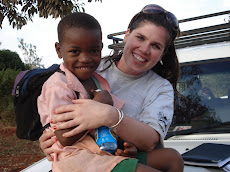
John Kisimir is a World Vision International relief communications expert from Kenya. He is currently based in Haiti.
The Haiti earthquake emergency intervention is proving to be one of the most challenging humanitarian situations in modern times.
Most humanitarian organizations are used to supporting major interventions in rural areas and rural communities do have functional social structures that make it easy to mobilize people thus making the business of giving aid much easier.
Haiti is different. Its city of Port-au-Prince is a fully packaged urban environment – from the suburbs to the sprawling slums of Cité Soleil. Its people are not peasant farmers whose lives have been spanned by a hurricane - some are professionals whose homes and jobs are no more. Some are families who lost a loved one they depended on. Some are folks who abandoned their homes - too scared to live under a concrete roof. Some are criminals who mugged and stole even before the earthquake. You can also count among these prisoners who walked to sweet freedom when the quake brought down some jails. Do not also forget unaffected people who pose as victims who attempt to receive free stuff – sad but true.
Aid agencies & the Military
It is one of those rare moments where aid agencies have embraced the support of the military in providing armed protection at aid distributions - an interesting combination of compassion and hard knuckles.
If you want to know how this combination is working, you should probably meet Dr. Debebe Dawit, a veteran aid worker for World Vision. His experience wraps up massive humanitarian interventions like the Asia Tsunami and others in Pakistan, the Southern Africa food crisis, Azerbaijan, Georgia, Russia, Angola, Rwanda and now Haiti.
He comes to Haiti with a heart and expertise to move things fast. Yet he sees the risks behind every makeshift camp in the city. Life is hard and residents are restless for all the suffering they are going through. Anything done wrong can cause distress and possibly a riot.
Today, he woke me up at 5:00 am to visit one camp to provide tents to those who do not have. The plan is to go early and make sure that only those who live in the camp get the help they need.
Working with UN peacekeepers to distribute aid
With a crew of 20 World Vision staff and United Nations peacekeepers from Nepal, we arrived at the sleepy camp. Some residents were sleeping in cars, while those who slept under the stars had started to stir.
As the peacekeepers took positions, World Vision staff swung into action putting a security barrier at the entrance of the camp. Leaders of the camp were quickly located and word was passed out from tent to tent. Sleepy camp residents started to come out holding coupons that were given through their leaders a few days ago. The elderly, the disabled and the sick got into line first. The young and the strong jostled for position at the end of a growing line.
A truck carrying the tents pulled over and the distribution starts. Hawk-eyed Dawit was busy giving instructions to his staff. Every detail in the process matters and no room for mistakes - from security to the recording of names on the register. The soldiers are on guard, stopping those without coupons outside the camp from getting into line. Often there are scuffles and arguments but the tension subsides once the beneficiaries realize that the process of sharing resources is transparent.
Humanitarian aid in Port-au-Prince is given with compassion and sometimes with hard knuckles.
“It is human nature to have conflict when in distress but my job is to make sure that those who deserve help get it. I must also keep the promise of that person who gave a one dollar donation to Haiti,” Dr. Dawit says.
Today’s distribution is over and another one is planned for tomorrow and the weeks and months to come.
Since the earthquake struck, World Vision with the support of the World Food Programme has given food aid to more than 864,000 people. None food items including 2,500 tents, 9,400 blankets, 11,400 cooking sets and 5,200 mosquito nets have reached 65,000 people in the camps to make life just a little bearable.
By John Kisimir
John Kisimir is a World Vision International relief communications expert from Kenya. He is currently based in Haiti.
The Haiti earthquake emergency intervention is proving to be one of the most challenging humanitarian situations in modern times.
Most humanitarian organizations are used to supporting major interventions in rural areas and rural communities do have functional social structures that make it easy to mobilize people thus making the business of giving aid much easier.
Haiti is different. Its city of Port-au-Prince is a fully packaged urban environment – from the suburbs to the sprawling slums of Cité Soleil. Its people are not peasant farmers whose lives have been spanned by a hurricane - some are professionals whose homes and jobs are no more. Some are families who lost a loved one they depended on. Some are folks who abandoned their homes - too scared to live under a concrete roof. Some are criminals who mugged and stole even before the earthquake. You can also count among these prisoners who walked to sweet freedom when the quake brought down some jails. Do not also forget unaffected people who pose as victims who attempt to receive free stuff – sad but true.
Aid agencies & the Military
It is one of those rare moments where aid agencies have embraced the support of the military in providing armed protection at aid distributions - an interesting combination of compassion and hard knuckles.
If you want to know how this combination is working, you should probably meet Dr. Debebe Dawit, a veteran aid worker for World Vision. His experience wraps up massive humanitarian interventions like the Asia Tsunami and others in Pakistan, the Southern Africa food crisis, Azerbaijan, Georgia, Russia, Angola, Rwanda and now Haiti.
He comes to Haiti with a heart and expertise to move things fast. Yet he sees the risks behind every makeshift camp in the city. Life is hard and residents are restless for all the suffering they are going through. Anything done wrong can cause distress and possibly a riot.
Today, he woke me up at 5:00 am to visit one camp to provide tents to those who do not have. The plan is to go early and make sure that only those who live in the camp get the help they need.
Working with UN peacekeepers to distribute aid
With a crew of 20 World Vision staff and United Nations peacekeepers from Nepal, we arrived at the sleepy camp. Some residents were sleeping in cars, while those who slept under the stars had started to stir.
As the peacekeepers took positions, World Vision staff swung into action putting a security barrier at the entrance of the camp. Leaders of the camp were quickly located and word was passed out from tent to tent. Sleepy camp residents started to come out holding coupons that were given through their leaders a few days ago. The elderly, the disabled and the sick got into line first. The young and the strong jostled for position at the end of a growing line.
A truck carrying the tents pulled over and the distribution starts. Hawk-eyed Dawit was busy giving instructions to his staff. Every detail in the process matters and no room for mistakes - from security to the recording of names on the register. The soldiers are on guard, stopping those without coupons outside the camp from getting into line. Often there are scuffles and arguments but the tension subsides once the beneficiaries realize that the process of sharing resources is transparent.
Humanitarian aid in Port-au-Prince is given with compassion and sometimes with hard knuckles.
“It is human nature to have conflict when in distress but my job is to make sure that those who deserve help get it. I must also keep the promise of that person who gave a one dollar donation to Haiti,” Dr. Dawit says.
Today’s distribution is over and another one is planned for tomorrow and the weeks and months to come.
Since the earthquake struck, World Vision with the support of the World Food Programme has given food aid to more than 864,000 people. None food items including 2,500 tents, 9,400 blankets, 11,400 cooking sets and 5,200 mosquito nets have reached 65,000 people in the camps to make life just a little bearable.
Showing posts with label emergency. Show all posts
Showing posts with label emergency. Show all posts
Thursday, March 18, 2010
Haiti: The challenge of aid work in an urban setting
Guest Blog from Haiti
 By John Kisimir
John Kisimir is a World Vision International relief communications expert from Kenya. He is currently based in Haiti.
The Haiti earthquake emergency intervention is proving to be one of the most challenging humanitarian situations in modern times.
Most humanitarian organizations are used to supporting major interventions in rural areas and rural communities do have functional social structures that make it easy to mobilize people thus making the business of giving aid much easier.
Haiti is different. Its city of Port-au-Prince is a fully packaged urban environment – from the suburbs to the sprawling slums of Cité Soleil. Its people are not peasant farmers whose lives have been spanned by a hurricane - some are professionals whose homes and jobs are no more. Some are families who lost a loved one they depended on. Some are folks who abandoned their homes - too scared to live under a concrete roof. Some are criminals who mugged and stole even before the earthquake. You can also count among these prisoners who walked to sweet freedom when the quake brought down some jails. Do not also forget unaffected people who pose as victims who attempt to receive free stuff – sad but true.
Aid agencies & the Military
It is one of those rare moments where aid agencies have embraced the support of the military in providing armed protection at aid distributions - an interesting combination of compassion and hard knuckles.
If you want to know how this combination is working, you should probably meet Dr. Debebe Dawit, a veteran aid worker for World Vision. His experience wraps up massive humanitarian interventions like the Asia Tsunami and others in Pakistan, the Southern Africa food crisis, Azerbaijan, Georgia, Russia, Angola, Rwanda and now Haiti.
He comes to Haiti with a heart and expertise to move things fast. Yet he sees the risks behind every makeshift camp in the city. Life is hard and residents are restless for all the suffering they are going through. Anything done wrong can cause distress and possibly a riot.
Today, he woke me up at 5:00 am to visit one camp to provide tents to those who do not have. The plan is to go early and make sure that only those who live in the camp get the help they need.
Working with UN peacekeepers to distribute aid
With a crew of 20 World Vision staff and United Nations peacekeepers from Nepal, we arrived at the sleepy camp. Some residents were sleeping in cars, while those who slept under the stars had started to stir.
As the peacekeepers took positions, World Vision staff swung into action putting a security barrier at the entrance of the camp. Leaders of the camp were quickly located and word was passed out from tent to tent. Sleepy camp residents started to come out holding coupons that were given through their leaders a few days ago. The elderly, the disabled and the sick got into line first. The young and the strong jostled for position at the end of a growing line.
A truck carrying the tents pulled over and the distribution starts. Hawk-eyed Dawit was busy giving instructions to his staff. Every detail in the process matters and no room for mistakes - from security to the recording of names on the register. The soldiers are on guard, stopping those without coupons outside the camp from getting into line. Often there are scuffles and arguments but the tension subsides once the beneficiaries realize that the process of sharing resources is transparent.
Humanitarian aid in Port-au-Prince is given with compassion and sometimes with hard knuckles.
“It is human nature to have conflict when in distress but my job is to make sure that those who deserve help get it. I must also keep the promise of that person who gave a one dollar donation to Haiti,” Dr. Dawit says.
Today’s distribution is over and another one is planned for tomorrow and the weeks and months to come.
Since the earthquake struck, World Vision with the support of the World Food Programme has given food aid to more than 864,000 people. None food items including 2,500 tents, 9,400 blankets, 11,400 cooking sets and 5,200 mosquito nets have reached 65,000 people in the camps to make life just a little bearable.
By John Kisimir
John Kisimir is a World Vision International relief communications expert from Kenya. He is currently based in Haiti.
The Haiti earthquake emergency intervention is proving to be one of the most challenging humanitarian situations in modern times.
Most humanitarian organizations are used to supporting major interventions in rural areas and rural communities do have functional social structures that make it easy to mobilize people thus making the business of giving aid much easier.
Haiti is different. Its city of Port-au-Prince is a fully packaged urban environment – from the suburbs to the sprawling slums of Cité Soleil. Its people are not peasant farmers whose lives have been spanned by a hurricane - some are professionals whose homes and jobs are no more. Some are families who lost a loved one they depended on. Some are folks who abandoned their homes - too scared to live under a concrete roof. Some are criminals who mugged and stole even before the earthquake. You can also count among these prisoners who walked to sweet freedom when the quake brought down some jails. Do not also forget unaffected people who pose as victims who attempt to receive free stuff – sad but true.
Aid agencies & the Military
It is one of those rare moments where aid agencies have embraced the support of the military in providing armed protection at aid distributions - an interesting combination of compassion and hard knuckles.
If you want to know how this combination is working, you should probably meet Dr. Debebe Dawit, a veteran aid worker for World Vision. His experience wraps up massive humanitarian interventions like the Asia Tsunami and others in Pakistan, the Southern Africa food crisis, Azerbaijan, Georgia, Russia, Angola, Rwanda and now Haiti.
He comes to Haiti with a heart and expertise to move things fast. Yet he sees the risks behind every makeshift camp in the city. Life is hard and residents are restless for all the suffering they are going through. Anything done wrong can cause distress and possibly a riot.
Today, he woke me up at 5:00 am to visit one camp to provide tents to those who do not have. The plan is to go early and make sure that only those who live in the camp get the help they need.
Working with UN peacekeepers to distribute aid
With a crew of 20 World Vision staff and United Nations peacekeepers from Nepal, we arrived at the sleepy camp. Some residents were sleeping in cars, while those who slept under the stars had started to stir.
As the peacekeepers took positions, World Vision staff swung into action putting a security barrier at the entrance of the camp. Leaders of the camp were quickly located and word was passed out from tent to tent. Sleepy camp residents started to come out holding coupons that were given through their leaders a few days ago. The elderly, the disabled and the sick got into line first. The young and the strong jostled for position at the end of a growing line.
A truck carrying the tents pulled over and the distribution starts. Hawk-eyed Dawit was busy giving instructions to his staff. Every detail in the process matters and no room for mistakes - from security to the recording of names on the register. The soldiers are on guard, stopping those without coupons outside the camp from getting into line. Often there are scuffles and arguments but the tension subsides once the beneficiaries realize that the process of sharing resources is transparent.
Humanitarian aid in Port-au-Prince is given with compassion and sometimes with hard knuckles.
“It is human nature to have conflict when in distress but my job is to make sure that those who deserve help get it. I must also keep the promise of that person who gave a one dollar donation to Haiti,” Dr. Dawit says.
Today’s distribution is over and another one is planned for tomorrow and the weeks and months to come.
Since the earthquake struck, World Vision with the support of the World Food Programme has given food aid to more than 864,000 people. None food items including 2,500 tents, 9,400 blankets, 11,400 cooking sets and 5,200 mosquito nets have reached 65,000 people in the camps to make life just a little bearable.
By John Kisimir
John Kisimir is a World Vision International relief communications expert from Kenya. He is currently based in Haiti.
The Haiti earthquake emergency intervention is proving to be one of the most challenging humanitarian situations in modern times.
Most humanitarian organizations are used to supporting major interventions in rural areas and rural communities do have functional social structures that make it easy to mobilize people thus making the business of giving aid much easier.
Haiti is different. Its city of Port-au-Prince is a fully packaged urban environment – from the suburbs to the sprawling slums of Cité Soleil. Its people are not peasant farmers whose lives have been spanned by a hurricane - some are professionals whose homes and jobs are no more. Some are families who lost a loved one they depended on. Some are folks who abandoned their homes - too scared to live under a concrete roof. Some are criminals who mugged and stole even before the earthquake. You can also count among these prisoners who walked to sweet freedom when the quake brought down some jails. Do not also forget unaffected people who pose as victims who attempt to receive free stuff – sad but true.
Aid agencies & the Military
It is one of those rare moments where aid agencies have embraced the support of the military in providing armed protection at aid distributions - an interesting combination of compassion and hard knuckles.
If you want to know how this combination is working, you should probably meet Dr. Debebe Dawit, a veteran aid worker for World Vision. His experience wraps up massive humanitarian interventions like the Asia Tsunami and others in Pakistan, the Southern Africa food crisis, Azerbaijan, Georgia, Russia, Angola, Rwanda and now Haiti.
He comes to Haiti with a heart and expertise to move things fast. Yet he sees the risks behind every makeshift camp in the city. Life is hard and residents are restless for all the suffering they are going through. Anything done wrong can cause distress and possibly a riot.
Today, he woke me up at 5:00 am to visit one camp to provide tents to those who do not have. The plan is to go early and make sure that only those who live in the camp get the help they need.
Working with UN peacekeepers to distribute aid
With a crew of 20 World Vision staff and United Nations peacekeepers from Nepal, we arrived at the sleepy camp. Some residents were sleeping in cars, while those who slept under the stars had started to stir.
As the peacekeepers took positions, World Vision staff swung into action putting a security barrier at the entrance of the camp. Leaders of the camp were quickly located and word was passed out from tent to tent. Sleepy camp residents started to come out holding coupons that were given through their leaders a few days ago. The elderly, the disabled and the sick got into line first. The young and the strong jostled for position at the end of a growing line.
A truck carrying the tents pulled over and the distribution starts. Hawk-eyed Dawit was busy giving instructions to his staff. Every detail in the process matters and no room for mistakes - from security to the recording of names on the register. The soldiers are on guard, stopping those without coupons outside the camp from getting into line. Often there are scuffles and arguments but the tension subsides once the beneficiaries realize that the process of sharing resources is transparent.
Humanitarian aid in Port-au-Prince is given with compassion and sometimes with hard knuckles.
“It is human nature to have conflict when in distress but my job is to make sure that those who deserve help get it. I must also keep the promise of that person who gave a one dollar donation to Haiti,” Dr. Dawit says.
Today’s distribution is over and another one is planned for tomorrow and the weeks and months to come.
Since the earthquake struck, World Vision with the support of the World Food Programme has given food aid to more than 864,000 people. None food items including 2,500 tents, 9,400 blankets, 11,400 cooking sets and 5,200 mosquito nets have reached 65,000 people in the camps to make life just a little bearable.

Wednesday, February 10, 2010
Hugh Jackman speaks out for the people of Haiti
Hugh Jackman, actor and World Vision ambassador, speaks out for the people of Haiti, whose lives have been devastated by the earthquake which struck on Jan 12th 2010.
Monday, February 8, 2010
Beyond Haiti's headlines
 Guest Blog by World Vision aid worker in Haiti Anna Ridout
While headlines report violence and looting in Haiti’s capital and observers speak of chaos and desperation on the streets, I’m seeing another side to Port-au-Prince often lost in disaster reporting.
Young boys scramble and leap over rubble chasing their ingenious kites made of flimsy plastic bags. A dozen teenagers sing their hearts out at a spontaneous open-air church service overlooking the devastated city.
Small businesses – barbers, corner shops, bars – have already sprung up in many of the haphazard settlements of tents and makeshift shelters. Children dance, sing and laugh in one of World Vision’s safe play areas.
Only three weeks after the earthquake caused catastrophe here, people are already finding ways to rebuild their lives, often with a smile.
Calm
While there have been moments when fighting has broken out at distributions and security remains a key issue for the population as well as aid agencies, these are notable incidents rather than a sign of widespread unrest.
When World Vision and other agencies launched a city-wide distribution of rice, with the World Food Programme, designed to reach close to two million people in just two weeks, many feared chaos.
Today our team was in the notoriously volatile district of Cite Soleil. We intentionally started the distribution a few days later there to give us additional time to talk to those who have influence in the community, such as leaders and local groups.
This meant we were able to reach 8,500 people today in the most dangerous part of town with calm and cooperation.
Gesture
Incredibly poor, Cite Soleil was already a huge densely-populated neighbourhood of iron roofs and inadequate services.
My non-existent Creole means I’m often communicating with people in gesture or expression. As the empty food trucks left the site, a young girl with confident inquisitive eyes looked at me and smiled. I scrunched up my nose and she did the same.
She tried to speak to me and I shrugged my shoulders; she laughed. It’s staggering how such a spirit of tenacity can exist alongside devastation and poverty.
Sharing
At all the food distributions this week the most vulnerable have been first in line. A blind man and his daughter, an elderly woman with her arm in a sling, a pregnant woman with a month to go, all left with 25-kilogramme sacks, assisted by World Vision volunteers, without hassle.
Elderly women tell me how the only way they are eating is because neighbours, friends, strangers are sharing food and water with them.
Such generosity was echoed by a woman I met in a lively crowded camp, who has lost both her home and job.
“When we get help here, we never fight,” she said.“We are friends and we share our things and support each other.”
A nine-year-old girl who lost both her parents in the quake tells me of a friend who has taken her in. Families who have been left with nothing are surviving by sharing.
Continued support
The generosity of the public all over the world in response to this disaster has been incredible. Today that money is helping provide families with food, healthcare, water and shelter – immediate life-saving relief that is still needed for the millions of people affected.
As we look to the long-term rebuilding of Haiti, the continued support of the international community will be vital. World Vision will continue working here beyond the emergency phase to help people find secure jobs, reliable incomes and strong community networks.
As local artists start once more to line the streets with bright bold paintings, and potters display mosaic plant pots in amongst the debris, artists and businesspeople alike need help to enable their businesses grow and families flourish.
The evidence on the ground here in Haiti proves there is the resiliency and determination to make it happen.
Guest Blog by World Vision aid worker in Haiti Anna Ridout
While headlines report violence and looting in Haiti’s capital and observers speak of chaos and desperation on the streets, I’m seeing another side to Port-au-Prince often lost in disaster reporting.
Young boys scramble and leap over rubble chasing their ingenious kites made of flimsy plastic bags. A dozen teenagers sing their hearts out at a spontaneous open-air church service overlooking the devastated city.
Small businesses – barbers, corner shops, bars – have already sprung up in many of the haphazard settlements of tents and makeshift shelters. Children dance, sing and laugh in one of World Vision’s safe play areas.
Only three weeks after the earthquake caused catastrophe here, people are already finding ways to rebuild their lives, often with a smile.
Calm
While there have been moments when fighting has broken out at distributions and security remains a key issue for the population as well as aid agencies, these are notable incidents rather than a sign of widespread unrest.
When World Vision and other agencies launched a city-wide distribution of rice, with the World Food Programme, designed to reach close to two million people in just two weeks, many feared chaos.
Today our team was in the notoriously volatile district of Cite Soleil. We intentionally started the distribution a few days later there to give us additional time to talk to those who have influence in the community, such as leaders and local groups.
This meant we were able to reach 8,500 people today in the most dangerous part of town with calm and cooperation.
Gesture
Incredibly poor, Cite Soleil was already a huge densely-populated neighbourhood of iron roofs and inadequate services.
My non-existent Creole means I’m often communicating with people in gesture or expression. As the empty food trucks left the site, a young girl with confident inquisitive eyes looked at me and smiled. I scrunched up my nose and she did the same.
She tried to speak to me and I shrugged my shoulders; she laughed. It’s staggering how such a spirit of tenacity can exist alongside devastation and poverty.
Sharing
At all the food distributions this week the most vulnerable have been first in line. A blind man and his daughter, an elderly woman with her arm in a sling, a pregnant woman with a month to go, all left with 25-kilogramme sacks, assisted by World Vision volunteers, without hassle.
Elderly women tell me how the only way they are eating is because neighbours, friends, strangers are sharing food and water with them.
Such generosity was echoed by a woman I met in a lively crowded camp, who has lost both her home and job.
“When we get help here, we never fight,” she said.“We are friends and we share our things and support each other.”
A nine-year-old girl who lost both her parents in the quake tells me of a friend who has taken her in. Families who have been left with nothing are surviving by sharing.
Continued support
The generosity of the public all over the world in response to this disaster has been incredible. Today that money is helping provide families with food, healthcare, water and shelter – immediate life-saving relief that is still needed for the millions of people affected.
As we look to the long-term rebuilding of Haiti, the continued support of the international community will be vital. World Vision will continue working here beyond the emergency phase to help people find secure jobs, reliable incomes and strong community networks.
As local artists start once more to line the streets with bright bold paintings, and potters display mosaic plant pots in amongst the debris, artists and businesspeople alike need help to enable their businesses grow and families flourish.
The evidence on the ground here in Haiti proves there is the resiliency and determination to make it happen.
Tuesday, January 26, 2010
Did you feel that one?
 by Guest Blogger James Addis in Haiti
I must be remarkably insensitive to after-shocks. Colleagues keep saying did you feel that one. Where were you at X p.m? or Y a.m. Did you feel it?
I must confess I haven’t felt a darn thing since the really big one a few days ago. I think my biggest concern is a really big quake in the dark. I’ve been sleeping with a flashlight in my hand. The thought of fumbling for it in the inky blackness does scare me a bit. But once I’ve got the flashlight firmly clenched in my left hand, I sleep like a baby.
It was a bit of a quiet day yesterday. I managed to phone my wife and my parents back in New Zealand. It was so good to hear their voices.
Evacuation
Another moving moment was watching children of World Vision Haiti staff being evacuated. They had turned up to the office to say their final goodbyes before taking the trip to the airport.
Earlier I had spoken to Jhonny Celicourt, World Vision Haiti’s communications manager, whose wife and 4-year-old daughter were evacuated a few days earlier to Florida. His mother lives in Orlando. Up until that point his family had been camped out in a tennis court, opposite his home. His house did not collapse but was seriously damaged during the quake.
Despite all the upheavals, and a seriously distressed daughter, Jhonny has been faithfully turning up to work every day. Indeed, the day after the quake, having not slept a wink all night, he joined a team delivering medical supplies to city hospitals absolutely swamped with quake victims.
Sleeping Rough
Later, I got out to a homeless camp, about a 5-minute drive from the World Vision office. I met Fabiola St. Juste. She does not like being there very much.
The eight-year-old sleeps on a particularly rocky patch of ground that was once part of a grassless soccer field in Petionville, Port-au-Prince. She sleeps on an old piece of carpet, but complains when she lies down it still feels hard and cold.
A few days ago, her only protection from the elements was provided by thin, torn, roughly-tied-together bed sheets, suspended by odd bits of lumber. It provided some protection from the sun but was useless against the rain. Three families—15 people—slept, ate, washed, and socialized, in the crudely constructed tent. Fabiola hated the fact that it was so crowded. “There was not enough room to eat, or sleep. There was not enough room to do anything,” she said emphatically.
Even so, she would not risk going back into her home, which suffered structural damage but was not destroyed in the earthquake.
If there’s one bright spot in the grim picture, it followed a World Vision distribution of tarpaulins, cooking utensils, and hygiene kits to the hundreds encamped on the soccer field. Fabiola considers the tarps to be the most helpful thing because they keep the rain out.
by Guest Blogger James Addis in Haiti
I must be remarkably insensitive to after-shocks. Colleagues keep saying did you feel that one. Where were you at X p.m? or Y a.m. Did you feel it?
I must confess I haven’t felt a darn thing since the really big one a few days ago. I think my biggest concern is a really big quake in the dark. I’ve been sleeping with a flashlight in my hand. The thought of fumbling for it in the inky blackness does scare me a bit. But once I’ve got the flashlight firmly clenched in my left hand, I sleep like a baby.
It was a bit of a quiet day yesterday. I managed to phone my wife and my parents back in New Zealand. It was so good to hear their voices.
Evacuation
Another moving moment was watching children of World Vision Haiti staff being evacuated. They had turned up to the office to say their final goodbyes before taking the trip to the airport.
Earlier I had spoken to Jhonny Celicourt, World Vision Haiti’s communications manager, whose wife and 4-year-old daughter were evacuated a few days earlier to Florida. His mother lives in Orlando. Up until that point his family had been camped out in a tennis court, opposite his home. His house did not collapse but was seriously damaged during the quake.
Despite all the upheavals, and a seriously distressed daughter, Jhonny has been faithfully turning up to work every day. Indeed, the day after the quake, having not slept a wink all night, he joined a team delivering medical supplies to city hospitals absolutely swamped with quake victims.
Sleeping Rough
Later, I got out to a homeless camp, about a 5-minute drive from the World Vision office. I met Fabiola St. Juste. She does not like being there very much.
The eight-year-old sleeps on a particularly rocky patch of ground that was once part of a grassless soccer field in Petionville, Port-au-Prince. She sleeps on an old piece of carpet, but complains when she lies down it still feels hard and cold.
A few days ago, her only protection from the elements was provided by thin, torn, roughly-tied-together bed sheets, suspended by odd bits of lumber. It provided some protection from the sun but was useless against the rain. Three families—15 people—slept, ate, washed, and socialized, in the crudely constructed tent. Fabiola hated the fact that it was so crowded. “There was not enough room to eat, or sleep. There was not enough room to do anything,” she said emphatically.
Even so, she would not risk going back into her home, which suffered structural damage but was not destroyed in the earthquake.
If there’s one bright spot in the grim picture, it followed a World Vision distribution of tarpaulins, cooking utensils, and hygiene kits to the hundreds encamped on the soccer field. Fabiola considers the tarps to be the most helpful thing because they keep the rain out.
Friday, January 22, 2010
Homeless in Haiti
People in Haiti who lost their homes in the earthquake are now living in temporary camps all over Port au Prince. They desperately need food, water, shelter and medical care.
Monday, January 18, 2010
Haiti Earthquake; "This is the most shocking I have ever seen."
 Guest Blog by World Vision worker James Addis in Haiti written on Jan 16th 2009
I’ve been deployed to many humanitarian emergencies. For me, this is the most shocking I have ever seen. I will never forget the corpses piled outside the city morgue.
Travelling back to a modest hotel at 2am last night we drove past hundreds, maybe thousands, who would have no shelter that night and perhaps not for many nights to come.
People everywhere
Some slept under vehicles. Some on sidewalks. Some dangerously on the road.
Some had set up chairs in the middle of the street and remained talking into the early hours.
Vehicles were parked haphazardly. We had to ask bystanders for one to be moved. Our driver got out and helped push it. People were good natured about it all. So far I have not seen a hint of the violence that some have predicted may erupt if conditions do not improve. On the contrary, for now, a spirit of cooperation seems to prevail.
At the hospital on my first day, where World Vision was distributing medical supplies, the hospital manager spoke enthusiastically of the volunteers who had come to help out.
Everything takes an age
It took ages to reach the hotel. We lost our way several times in the narrow streets, many blocked by large bits of rubble.
The good news is World Vision’s flights bringing emergency supplies have started to land. We are expecting several in the next few days. The next challenge will be to distribute it.
Everything takes an age. It’s hard to find trucks and gasoline. The simplest things—getting a driver, finding an internet connection, finding a place to stay at night require a lot of effort and planning.
It’s tiring work. But one only has to walk the streets for a few seconds. Take in the smells emanating from the makeshift camps to realize that ones own position is a thousand times better than that of those all around you.
Guest Blog by World Vision worker James Addis in Haiti written on Jan 16th 2009
I’ve been deployed to many humanitarian emergencies. For me, this is the most shocking I have ever seen. I will never forget the corpses piled outside the city morgue.
Travelling back to a modest hotel at 2am last night we drove past hundreds, maybe thousands, who would have no shelter that night and perhaps not for many nights to come.
People everywhere
Some slept under vehicles. Some on sidewalks. Some dangerously on the road.
Some had set up chairs in the middle of the street and remained talking into the early hours.
Vehicles were parked haphazardly. We had to ask bystanders for one to be moved. Our driver got out and helped push it. People were good natured about it all. So far I have not seen a hint of the violence that some have predicted may erupt if conditions do not improve. On the contrary, for now, a spirit of cooperation seems to prevail.
At the hospital on my first day, where World Vision was distributing medical supplies, the hospital manager spoke enthusiastically of the volunteers who had come to help out.
Everything takes an age
It took ages to reach the hotel. We lost our way several times in the narrow streets, many blocked by large bits of rubble.
The good news is World Vision’s flights bringing emergency supplies have started to land. We are expecting several in the next few days. The next challenge will be to distribute it.
Everything takes an age. It’s hard to find trucks and gasoline. The simplest things—getting a driver, finding an internet connection, finding a place to stay at night require a lot of effort and planning.
It’s tiring work. But one only has to walk the streets for a few seconds. Take in the smells emanating from the makeshift camps to realize that ones own position is a thousand times better than that of those all around you.
Earthquake devastates Haiti
 You have probably already seen the pictures of the devastating effect the recent 7.0 magnitude earthquake had on the people of Haiti.
Tens of thousands have already died and many more are sick and injured. Many have been left with nothing, as their homes, their possessions and their access to clean water have been all destroyed.
Emergency Response
You probably know World Vision through our child sponsorship programmes, but what you may not know is that we are also one of the world’s largest emergency aid organisations.
World Vision has been active in Haiti for over 30 years and had 370 staff already working in the country before the earthquake. Since the earthquake struck on Tuesday though, additional staff and supplies have been flown in toprovide much needed expertise and assist with immediate needs such as search & rescue, food, water & shelter and medical care & supplies.
James Addis: Guest Blogger in Haiti
For the next while, this blog will be updated by James Addis a World Vision aid worker who is now in Haiti to help with the relief effort. World Vision Ireland is also running an appeal to help the survivors of the quake. If you would like to donate, go to www.worldvision.ie or tel +353 1 498 0800
You have probably already seen the pictures of the devastating effect the recent 7.0 magnitude earthquake had on the people of Haiti.
Tens of thousands have already died and many more are sick and injured. Many have been left with nothing, as their homes, their possessions and their access to clean water have been all destroyed.
Emergency Response
You probably know World Vision through our child sponsorship programmes, but what you may not know is that we are also one of the world’s largest emergency aid organisations.
World Vision has been active in Haiti for over 30 years and had 370 staff already working in the country before the earthquake. Since the earthquake struck on Tuesday though, additional staff and supplies have been flown in toprovide much needed expertise and assist with immediate needs such as search & rescue, food, water & shelter and medical care & supplies.
James Addis: Guest Blogger in Haiti
For the next while, this blog will be updated by James Addis a World Vision aid worker who is now in Haiti to help with the relief effort. World Vision Ireland is also running an appeal to help the survivors of the quake. If you would like to donate, go to www.worldvision.ie or tel +353 1 498 0800
Subscribe to:
Posts (Atom)