I'm no longer updating this site but don't worry I'm still blogging.
You can read all my news from East Africa by clicking here
 By Evelyn
World Vision seeks to understand and address the root causes of poverty and injustice but like most things in life, this sounds easier than it actually is. The causes of poverty are incredibly complex and involve historical injustices, current oppressive systems and sheer greed.
However, the complexity and challenge of understanding and addressing poverty is no excuse for shoddy development work.
It is not enough to claim ignorance and good intentions. Too often, Africans have been the recipients of poor development efforts. As a result, we have become either dependent on hand-outs, which encourage paternalism and further disempower us. Or we become sceptical and even –to be frank- cynical towards the intentions of those who want to ‘help’ us, as most of these efforts end up doing more harm than good.
We know how to fish already!
Muthoni Wanyeki, the Executive Director of the Kenya Human Rights Commission, said it best in her commentary about the role of the civil society and private sector in promoting development in Kenya:
"The question is not then the old conundrum about giving a man (sic) a fish versus teaching him to fish. It is about first assuming that s/he knows how to fish and addressing what’s preventing her or him from both being able to fish in the first place and from benefitting from having done so in the second place."
Working with the Poor & Oppressed
May is partnership month within World Vision and staff all over the world came together to reflect on their commitment to our call to ‘work with the poor and oppressed to promote human transformation’.
Our call is a pretty tall order, but an important one. What attracted me to World Vision in the first place is our unwavering dedication to good development work. We work with the communities and not for the communities. This means recognising the poor as active participants and leaders of their own development and not merely passive recipients of development efforts. It means addressing the interwoven intricacies that perpetuate poverty and oppression.
In practise, this means reflecting on past experiences, learning from mistakes and ensuring they are not repeated, while always keeping in mind that our aim is to empower people, restore hope, self-esteem and dignity. During this month’s reflection session, one statement really hit home for me: "If development does not restore people’s sense of self-worth, little will be accomplished." I absolutely love that this is the way we are thinking as an organisation.
By Evelyn
World Vision seeks to understand and address the root causes of poverty and injustice but like most things in life, this sounds easier than it actually is. The causes of poverty are incredibly complex and involve historical injustices, current oppressive systems and sheer greed.
However, the complexity and challenge of understanding and addressing poverty is no excuse for shoddy development work.
It is not enough to claim ignorance and good intentions. Too often, Africans have been the recipients of poor development efforts. As a result, we have become either dependent on hand-outs, which encourage paternalism and further disempower us. Or we become sceptical and even –to be frank- cynical towards the intentions of those who want to ‘help’ us, as most of these efforts end up doing more harm than good.
We know how to fish already!
Muthoni Wanyeki, the Executive Director of the Kenya Human Rights Commission, said it best in her commentary about the role of the civil society and private sector in promoting development in Kenya:
"The question is not then the old conundrum about giving a man (sic) a fish versus teaching him to fish. It is about first assuming that s/he knows how to fish and addressing what’s preventing her or him from both being able to fish in the first place and from benefitting from having done so in the second place."
Working with the Poor & Oppressed
May is partnership month within World Vision and staff all over the world came together to reflect on their commitment to our call to ‘work with the poor and oppressed to promote human transformation’.
Our call is a pretty tall order, but an important one. What attracted me to World Vision in the first place is our unwavering dedication to good development work. We work with the communities and not for the communities. This means recognising the poor as active participants and leaders of their own development and not merely passive recipients of development efforts. It means addressing the interwoven intricacies that perpetuate poverty and oppression.
In practise, this means reflecting on past experiences, learning from mistakes and ensuring they are not repeated, while always keeping in mind that our aim is to empower people, restore hope, self-esteem and dignity. During this month’s reflection session, one statement really hit home for me: "If development does not restore people’s sense of self-worth, little will be accomplished." I absolutely love that this is the way we are thinking as an organisation.


 And then there was rain…
Rain has finally come to Eastern Kenya (and most of Kenya). Driving through Mwala, I am amazed at the difference in the landscape. The fields are now lusciously green and filled with crops. The once dried rivers are now full. The heavy rains have turned the roads into a ‘four wheel drive only’ zone and part of our afternoon is spent trying to extract our heavy-duty 4x4 from the riverbed.
Looking at this scenery, one would think Mwala is a fertile area with high food production. “Visit during September/October and you will not believe it is the same place - it will be very dry and dusty,” says Frank Meme, the Mwala programme manager. “Last year’s drought and the resulting famine were extremely severe; the community was forced to rely on relief food”, he reminds us.
Evelyn and I were off to visit an Irish Aid funded project in Mwala ADP, to check up on how your tax contributions have been put to work!
At last, enough food!
After a long, bumpy drive, we arrived at the Wali Imwe Ndigua (one piece of cloth cannot make a dress) farmers group to a red carpet welcome. Each group member told us how this project, coupled with the great rains, has drastically increased his/her yield.
This farmers group had been trained in improved farming methods and received crop seeds, fruit tree seedlings, farming equipment and livestock (Galla goats and cockerels). This has dramatically improved the group’s ability to fend for themselves:
For example, the group’s treasurer told us that he has harvested 500kg of maize compared to 30kg of maize the previous season.
Each group member contributes a small amount of their harvest to be stored and used as seeds for the next season. The surplus food is sold at the market and the profit used to benefit the group and promote their development. The group is determined to work their way out of poverty: “Hatutaki watu wa hiki kikundi wasikie njaa tena” (we don’t want our group members to go hungry again), the group’s Chairman told us.
Water Kiosks
At another project site, pointing to some far off hills, the Secretary for the Water Users Association recalls the long distances community members would walk to fetch water.
Irish Aid funded a food security project which enabled the construction of a borehole, water tank and eight water kiosks in this drought prone area. Water from the borehole is pumped to the water kiosks where it is distributed to community members at an affordable rate. These kiosks are placed at convenient locations, reducing the distance community members walk to fetch water. Previously, people were walking up to 20km to fetch water, which meant entire days were wasted just trying to get water.
To compensate for the lack of water, clothes went unwashed and bathing became a luxury. This led to the outbreak of skin diseases and water borne diseases – misery.
Making a difference
Despite the brevity of our visit, it was clear that the community were 100% behind the project and were maximising all opportunities given to lifting themselves out of poverty. I was deeply humbled by their welcome and gratitude for the help they have received from Irish Aid through World Vision Ireland.
I was moved by the sense of accomplishment in their voices when they showed us their crops and livestock and their hope for the future. This visit reminded me of the reason for which we do this work- we are transforming lives and restoring hope.
By Evelyn in Kenya
And then there was rain…
Rain has finally come to Eastern Kenya (and most of Kenya). Driving through Mwala, I am amazed at the difference in the landscape. The fields are now lusciously green and filled with crops. The once dried rivers are now full. The heavy rains have turned the roads into a ‘four wheel drive only’ zone and part of our afternoon is spent trying to extract our heavy-duty 4x4 from the riverbed.
Looking at this scenery, one would think Mwala is a fertile area with high food production. “Visit during September/October and you will not believe it is the same place - it will be very dry and dusty,” says Frank Meme, the Mwala programme manager. “Last year’s drought and the resulting famine were extremely severe; the community was forced to rely on relief food”, he reminds us.
Evelyn and I were off to visit an Irish Aid funded project in Mwala ADP, to check up on how your tax contributions have been put to work!
At last, enough food!
After a long, bumpy drive, we arrived at the Wali Imwe Ndigua (one piece of cloth cannot make a dress) farmers group to a red carpet welcome. Each group member told us how this project, coupled with the great rains, has drastically increased his/her yield.
This farmers group had been trained in improved farming methods and received crop seeds, fruit tree seedlings, farming equipment and livestock (Galla goats and cockerels). This has dramatically improved the group’s ability to fend for themselves:
For example, the group’s treasurer told us that he has harvested 500kg of maize compared to 30kg of maize the previous season.
Each group member contributes a small amount of their harvest to be stored and used as seeds for the next season. The surplus food is sold at the market and the profit used to benefit the group and promote their development. The group is determined to work their way out of poverty: “Hatutaki watu wa hiki kikundi wasikie njaa tena” (we don’t want our group members to go hungry again), the group’s Chairman told us.
Water Kiosks
At another project site, pointing to some far off hills, the Secretary for the Water Users Association recalls the long distances community members would walk to fetch water.
Irish Aid funded a food security project which enabled the construction of a borehole, water tank and eight water kiosks in this drought prone area. Water from the borehole is pumped to the water kiosks where it is distributed to community members at an affordable rate. These kiosks are placed at convenient locations, reducing the distance community members walk to fetch water. Previously, people were walking up to 20km to fetch water, which meant entire days were wasted just trying to get water.
To compensate for the lack of water, clothes went unwashed and bathing became a luxury. This led to the outbreak of skin diseases and water borne diseases – misery.
Making a difference
Despite the brevity of our visit, it was clear that the community were 100% behind the project and were maximising all opportunities given to lifting themselves out of poverty. I was deeply humbled by their welcome and gratitude for the help they have received from Irish Aid through World Vision Ireland.
I was moved by the sense of accomplishment in their voices when they showed us their crops and livestock and their hope for the future. This visit reminded me of the reason for which we do this work- we are transforming lives and restoring hope.
By Evelyn in Kenya
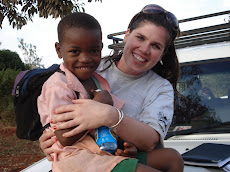
 I know I’ve been conspicuously absent on my blog for the past few months and there’s been lots of interesting developments since December. For one, I now have an intern onboard! Her name is Evelyn Gathuru (see photo) and I’m going to let her introduce herself here:
“After living in Canada for 5 years, where I completed an undergraduate degree in Human Biology and Sociology from the University of Toronto, I decided to move back home to sunny Kenya. After a brief re-adjustment period (e.g. remembering that Kenyans tend to drive on the left side of the road), I was ready to jump into development work in Kenya. I then decided to pursue a Post-Graduate Diploma in Project Planning and Management for Development Projects at the Catholic University of Eastern Africa, which I completed in October 2009.
After exposure to development issues in Kenya and the rest of Africa, I felt quite disappointed by the approach we were taking to address these issues. It did not seem like the root causes of poverty, inequality and injustice were being sufficiently addressed. Rather, it seemed like we were constantly putting out fires. I was (and still am) specifically disappointed with the lack of political goodwill to make significant positive changes in the well-being of the Kenyan population.
My sincere desire to work towards bringing sustainable development and improving the well-being of Kenyans prompted me to join World Vision Ireland. I especially like their child-focused approach. I had finally found an organisation whose developmental approach was in line with my thoughts and feelings regarding development work i.e. one that was committed to working towards tackling the root causes of poverty, inequality and injustice in order to secure long-term change.”
Evelyn will be working with me until at least September and she'll be helping out with the blog, so you'll be hearing plenty more from her!
I know I’ve been conspicuously absent on my blog for the past few months and there’s been lots of interesting developments since December. For one, I now have an intern onboard! Her name is Evelyn Gathuru (see photo) and I’m going to let her introduce herself here:
“After living in Canada for 5 years, where I completed an undergraduate degree in Human Biology and Sociology from the University of Toronto, I decided to move back home to sunny Kenya. After a brief re-adjustment period (e.g. remembering that Kenyans tend to drive on the left side of the road), I was ready to jump into development work in Kenya. I then decided to pursue a Post-Graduate Diploma in Project Planning and Management for Development Projects at the Catholic University of Eastern Africa, which I completed in October 2009.
After exposure to development issues in Kenya and the rest of Africa, I felt quite disappointed by the approach we were taking to address these issues. It did not seem like the root causes of poverty, inequality and injustice were being sufficiently addressed. Rather, it seemed like we were constantly putting out fires. I was (and still am) specifically disappointed with the lack of political goodwill to make significant positive changes in the well-being of the Kenyan population.
My sincere desire to work towards bringing sustainable development and improving the well-being of Kenyans prompted me to join World Vision Ireland. I especially like their child-focused approach. I had finally found an organisation whose developmental approach was in line with my thoughts and feelings regarding development work i.e. one that was committed to working towards tackling the root causes of poverty, inequality and injustice in order to secure long-term change.”
Evelyn will be working with me until at least September and she'll be helping out with the blog, so you'll be hearing plenty more from her!
 Guest Blog by World Vision aid worker in Haiti Anna Ridout
While headlines report violence and looting in Haiti’s capital and observers speak of chaos and desperation on the streets, I’m seeing another side to Port-au-Prince often lost in disaster reporting.
Young boys scramble and leap over rubble chasing their ingenious kites made of flimsy plastic bags. A dozen teenagers sing their hearts out at a spontaneous open-air church service overlooking the devastated city.
Small businesses – barbers, corner shops, bars – have already sprung up in many of the haphazard settlements of tents and makeshift shelters. Children dance, sing and laugh in one of World Vision’s safe play areas.
Only three weeks after the earthquake caused catastrophe here, people are already finding ways to rebuild their lives, often with a smile.
Calm
While there have been moments when fighting has broken out at distributions and security remains a key issue for the population as well as aid agencies, these are notable incidents rather than a sign of widespread unrest.
When World Vision and other agencies launched a city-wide distribution of rice, with the World Food Programme, designed to reach close to two million people in just two weeks, many feared chaos.
Today our team was in the notoriously volatile district of Cite Soleil. We intentionally started the distribution a few days later there to give us additional time to talk to those who have influence in the community, such as leaders and local groups.
This meant we were able to reach 8,500 people today in the most dangerous part of town with calm and cooperation.
Gesture
Incredibly poor, Cite Soleil was already a huge densely-populated neighbourhood of iron roofs and inadequate services.
My non-existent Creole means I’m often communicating with people in gesture or expression. As the empty food trucks left the site, a young girl with confident inquisitive eyes looked at me and smiled. I scrunched up my nose and she did the same.
She tried to speak to me and I shrugged my shoulders; she laughed. It’s staggering how such a spirit of tenacity can exist alongside devastation and poverty.
Sharing
At all the food distributions this week the most vulnerable have been first in line. A blind man and his daughter, an elderly woman with her arm in a sling, a pregnant woman with a month to go, all left with 25-kilogramme sacks, assisted by World Vision volunteers, without hassle.
Elderly women tell me how the only way they are eating is because neighbours, friends, strangers are sharing food and water with them.
Such generosity was echoed by a woman I met in a lively crowded camp, who has lost both her home and job.
“When we get help here, we never fight,” she said.“We are friends and we share our things and support each other.”
A nine-year-old girl who lost both her parents in the quake tells me of a friend who has taken her in. Families who have been left with nothing are surviving by sharing.
Continued support
The generosity of the public all over the world in response to this disaster has been incredible. Today that money is helping provide families with food, healthcare, water and shelter – immediate life-saving relief that is still needed for the millions of people affected.
As we look to the long-term rebuilding of Haiti, the continued support of the international community will be vital. World Vision will continue working here beyond the emergency phase to help people find secure jobs, reliable incomes and strong community networks.
As local artists start once more to line the streets with bright bold paintings, and potters display mosaic plant pots in amongst the debris, artists and businesspeople alike need help to enable their businesses grow and families flourish.
The evidence on the ground here in Haiti proves there is the resiliency and determination to make it happen.
Guest Blog by World Vision aid worker in Haiti Anna Ridout
While headlines report violence and looting in Haiti’s capital and observers speak of chaos and desperation on the streets, I’m seeing another side to Port-au-Prince often lost in disaster reporting.
Young boys scramble and leap over rubble chasing their ingenious kites made of flimsy plastic bags. A dozen teenagers sing their hearts out at a spontaneous open-air church service overlooking the devastated city.
Small businesses – barbers, corner shops, bars – have already sprung up in many of the haphazard settlements of tents and makeshift shelters. Children dance, sing and laugh in one of World Vision’s safe play areas.
Only three weeks after the earthquake caused catastrophe here, people are already finding ways to rebuild their lives, often with a smile.
Calm
While there have been moments when fighting has broken out at distributions and security remains a key issue for the population as well as aid agencies, these are notable incidents rather than a sign of widespread unrest.
When World Vision and other agencies launched a city-wide distribution of rice, with the World Food Programme, designed to reach close to two million people in just two weeks, many feared chaos.
Today our team was in the notoriously volatile district of Cite Soleil. We intentionally started the distribution a few days later there to give us additional time to talk to those who have influence in the community, such as leaders and local groups.
This meant we were able to reach 8,500 people today in the most dangerous part of town with calm and cooperation.
Gesture
Incredibly poor, Cite Soleil was already a huge densely-populated neighbourhood of iron roofs and inadequate services.
My non-existent Creole means I’m often communicating with people in gesture or expression. As the empty food trucks left the site, a young girl with confident inquisitive eyes looked at me and smiled. I scrunched up my nose and she did the same.
She tried to speak to me and I shrugged my shoulders; she laughed. It’s staggering how such a spirit of tenacity can exist alongside devastation and poverty.
Sharing
At all the food distributions this week the most vulnerable have been first in line. A blind man and his daughter, an elderly woman with her arm in a sling, a pregnant woman with a month to go, all left with 25-kilogramme sacks, assisted by World Vision volunteers, without hassle.
Elderly women tell me how the only way they are eating is because neighbours, friends, strangers are sharing food and water with them.
Such generosity was echoed by a woman I met in a lively crowded camp, who has lost both her home and job.
“When we get help here, we never fight,” she said.“We are friends and we share our things and support each other.”
A nine-year-old girl who lost both her parents in the quake tells me of a friend who has taken her in. Families who have been left with nothing are surviving by sharing.
Continued support
The generosity of the public all over the world in response to this disaster has been incredible. Today that money is helping provide families with food, healthcare, water and shelter – immediate life-saving relief that is still needed for the millions of people affected.
As we look to the long-term rebuilding of Haiti, the continued support of the international community will be vital. World Vision will continue working here beyond the emergency phase to help people find secure jobs, reliable incomes and strong community networks.
As local artists start once more to line the streets with bright bold paintings, and potters display mosaic plant pots in amongst the debris, artists and businesspeople alike need help to enable their businesses grow and families flourish.
The evidence on the ground here in Haiti proves there is the resiliency and determination to make it happen.
 Guest Blog by Anna Ridout, Emergency Communications Officer for World Vision in Haiti
This evening I walk up a steep hill covered in makeshift huts made of floral pattern sheets hiked up on anything that will hold them. I speak to a mother who is living in a fragile shelter perched on precarious rubble.
“We are worried about people who come to pick up our children,” she said, “it has happened here.”
Missing Child
At crossroads next to a flattened school, a man waited patiently behind the roped area as World Vision gave families rice this morning. Since the earthquake struck Haiti three weeks ago, he hasn’t seen his seven-year-old daughter. He shows me Jaymmiqua’s birth certificate and explains he has done everything he can think of to find her.
“I tried to look for her but I couldn’t find any information,” he said. “The neighbours said they don’t know where she is. The way the house is broken there’s no way to check inside. It’s like my soul has disappeared with my daughter.”
Afraid
This afternoon I talked to children who had found a safe and fun place to play at World Vision’s children’s play area. I met a nine-year-old girl whose Mum was killed instantly in the quake, while her father, severely injured, was flown to Santo Domingo for urgent medical treatment.
“I’m afraid of another earthquake,” she said. “I’m afraid to be alone. I’m afraid of people who may come to do bad things to me.”
Dust
A 12-year-old boy lives on a roundabout in what used to be the smart part of town. Since his Mum died, he is living with his Aunt and two cousins. He told me what happened on the day of the quake.
“I was on the street near my house and I felt a shake and I saw lots of dust,” he said. “I just stood there. If I was supposed to run, I don’t know where I was supposed to go.
“My Mum was at the open market and when she tried to come back home, some blocks fell on her and killed her. People found her and I saw her. I felt shaken because I lost my mother.
“My father has been living in Santo Domingo before the earthquake. I don’t know anything about him. I have a brother and sister but we are not together,” he said.
Alone and Vulnerable
When the earth split and plunged Port-au-Prince and surrounding areas into chaos, it did not just destroy lives, businesses and buildings. The earthquake split families apart and left many children alone and vulnerable.
Just as the recovery following such a catastrophic disaster will take a long time, it will take weeks and months for children to be reunited with their parents and for parents to find their children.
As just one day in this densely-populated city proves, the problem is complex. And as with most complex issues, there is no quick-fix solution.
At risk
As this week has shown, children separated from their families are at risk of abuse and exploitation, trafficking or losing their identities permanently if they are not rapidly registered for family tracing and reunification.
World Vision has called on a halt to all new international adoptions, while working hard to protect and identify children in Haiti and over the long-term will help strengthen community networks and support systems.
Taking children out of the country in the midst of chaos will permanently separate thousands of children from their families – a separation that could compound the acute trauma they are already suffering and inflict long-term damage on their chances of recovery.
As I and the woman agreed as we stood next to her temporary shelter over-looking the destruction of the quake, let’s not let the genuine desire to help those in need become an excuse for short cuts or easy answers.
Guest Blog by Anna Ridout, Emergency Communications Officer for World Vision in Haiti
This evening I walk up a steep hill covered in makeshift huts made of floral pattern sheets hiked up on anything that will hold them. I speak to a mother who is living in a fragile shelter perched on precarious rubble.
“We are worried about people who come to pick up our children,” she said, “it has happened here.”
Missing Child
At crossroads next to a flattened school, a man waited patiently behind the roped area as World Vision gave families rice this morning. Since the earthquake struck Haiti three weeks ago, he hasn’t seen his seven-year-old daughter. He shows me Jaymmiqua’s birth certificate and explains he has done everything he can think of to find her.
“I tried to look for her but I couldn’t find any information,” he said. “The neighbours said they don’t know where she is. The way the house is broken there’s no way to check inside. It’s like my soul has disappeared with my daughter.”
Afraid
This afternoon I talked to children who had found a safe and fun place to play at World Vision’s children’s play area. I met a nine-year-old girl whose Mum was killed instantly in the quake, while her father, severely injured, was flown to Santo Domingo for urgent medical treatment.
“I’m afraid of another earthquake,” she said. “I’m afraid to be alone. I’m afraid of people who may come to do bad things to me.”
Dust
A 12-year-old boy lives on a roundabout in what used to be the smart part of town. Since his Mum died, he is living with his Aunt and two cousins. He told me what happened on the day of the quake.
“I was on the street near my house and I felt a shake and I saw lots of dust,” he said. “I just stood there. If I was supposed to run, I don’t know where I was supposed to go.
“My Mum was at the open market and when she tried to come back home, some blocks fell on her and killed her. People found her and I saw her. I felt shaken because I lost my mother.
“My father has been living in Santo Domingo before the earthquake. I don’t know anything about him. I have a brother and sister but we are not together,” he said.
Alone and Vulnerable
When the earth split and plunged Port-au-Prince and surrounding areas into chaos, it did not just destroy lives, businesses and buildings. The earthquake split families apart and left many children alone and vulnerable.
Just as the recovery following such a catastrophic disaster will take a long time, it will take weeks and months for children to be reunited with their parents and for parents to find their children.
As just one day in this densely-populated city proves, the problem is complex. And as with most complex issues, there is no quick-fix solution.
At risk
As this week has shown, children separated from their families are at risk of abuse and exploitation, trafficking or losing their identities permanently if they are not rapidly registered for family tracing and reunification.
World Vision has called on a halt to all new international adoptions, while working hard to protect and identify children in Haiti and over the long-term will help strengthen community networks and support systems.
Taking children out of the country in the midst of chaos will permanently separate thousands of children from their families – a separation that could compound the acute trauma they are already suffering and inflict long-term damage on their chances of recovery.
As I and the woman agreed as we stood next to her temporary shelter over-looking the destruction of the quake, let’s not let the genuine desire to help those in need become an excuse for short cuts or easy answers.
 Guest blog by World Vision aid worker James Addis
I’m writing this from a little eight-seater plane that has just flown out of Port-au-Prince airport. I think the pilot said the plane was a Chieftain but it was difficult to hear him above the whirr of the engines.
Other communicators will be coming take my place. It’s an odd feeling. I’ve spent the last few days looking forward to returning to the comforts of home. Now they are actually in sight, I feel slightly deflated.
One feels a whiff of nostalgia for working long hours in difficult conditions, rubbing shoulders with people who have lost everything including those dearest to them and possibly are now missing a limb; and yet are prepared to soldier on regardless.
Real life
It’s odd how we spend most of our lives seeking some kind of security and comfort—financial security, a decent retirement, a comfortable home to live in with conveniences like dishwashers and microwave ovens; an air-conditioned office with every kind of phone and internet connection, and things to entertain like Wii players, and ipods, and big, flat-screen televisions.
But the real living, I imagine, is done when everything is haphazard, unreliable, uncomfortable, and dangerous.
Comfort zone
Out of your comfort zone you are forced to rely on every scrap of ingenuity, resourcefulness, and courage that you can scrape together. And there’s a certain kind of joy in discovering you have those things when you did not know you had them. And when they are exhausted you are forced to lean on God and simply ask that he take care of things. There’s a sense of release and peace in that.
Free Food
I think Gilbert Bailly will be feeling some of these emotions. He is my favorite person in Haiti right now. His three Muncheez pizza restaurants miraculously remained intact during the quake. But he realized he had not a chance of running a business in the current chaos.
Nobody has money to eat out, and there’s no fuel or power to run his restaurants normally. Did he retire to a corner and sulk? Did he shoot himself? Did he anticipate financial ruin?
Actually, no. He calmly reopens one of his restaurants and uses it as a base to provide cooked meals and distribute donated food for free to people who desperately need it and can’t afford to pay.
Right now much of this food is coming from World Vision. Other donors are providing the fuel he needs to keep the place running.
Staff volunteering
His formerly paid-staff have become volunteers. They know there is no money in this. I’m sure their satisfaction comes from seeing the hundreds of hungry come through the door to get free food.
Each day, Gilbert’s sstaff distribute about 1,000 plastic bracelets in a needy part of the city. They vary the location to spread the goodwill around.
Late in the afternoon, the restaurant opens its doors and those who turn up wearing a bracelet are allowed admission.
I’m thinkin many years from now, when Gilbert reflects on his life and what he has accomplished in business and elsewhere, he will probably remember this as one of the toughest times and a commercial failure. I think he will also remember it as his finest hour.
Guest blog by World Vision aid worker James Addis
I’m writing this from a little eight-seater plane that has just flown out of Port-au-Prince airport. I think the pilot said the plane was a Chieftain but it was difficult to hear him above the whirr of the engines.
Other communicators will be coming take my place. It’s an odd feeling. I’ve spent the last few days looking forward to returning to the comforts of home. Now they are actually in sight, I feel slightly deflated.
One feels a whiff of nostalgia for working long hours in difficult conditions, rubbing shoulders with people who have lost everything including those dearest to them and possibly are now missing a limb; and yet are prepared to soldier on regardless.
Real life
It’s odd how we spend most of our lives seeking some kind of security and comfort—financial security, a decent retirement, a comfortable home to live in with conveniences like dishwashers and microwave ovens; an air-conditioned office with every kind of phone and internet connection, and things to entertain like Wii players, and ipods, and big, flat-screen televisions.
But the real living, I imagine, is done when everything is haphazard, unreliable, uncomfortable, and dangerous.
Comfort zone
Out of your comfort zone you are forced to rely on every scrap of ingenuity, resourcefulness, and courage that you can scrape together. And there’s a certain kind of joy in discovering you have those things when you did not know you had them. And when they are exhausted you are forced to lean on God and simply ask that he take care of things. There’s a sense of release and peace in that.
Free Food
I think Gilbert Bailly will be feeling some of these emotions. He is my favorite person in Haiti right now. His three Muncheez pizza restaurants miraculously remained intact during the quake. But he realized he had not a chance of running a business in the current chaos.
Nobody has money to eat out, and there’s no fuel or power to run his restaurants normally. Did he retire to a corner and sulk? Did he shoot himself? Did he anticipate financial ruin?
Actually, no. He calmly reopens one of his restaurants and uses it as a base to provide cooked meals and distribute donated food for free to people who desperately need it and can’t afford to pay.
Right now much of this food is coming from World Vision. Other donors are providing the fuel he needs to keep the place running.
Staff volunteering
His formerly paid-staff have become volunteers. They know there is no money in this. I’m sure their satisfaction comes from seeing the hundreds of hungry come through the door to get free food.
Each day, Gilbert’s sstaff distribute about 1,000 plastic bracelets in a needy part of the city. They vary the location to spread the goodwill around.
Late in the afternoon, the restaurant opens its doors and those who turn up wearing a bracelet are allowed admission.
I’m thinkin many years from now, when Gilbert reflects on his life and what he has accomplished in business and elsewhere, he will probably remember this as one of the toughest times and a commercial failure. I think he will also remember it as his finest hour.
 by Guest Blogger James Addis in Haiti
I must be remarkably insensitive to after-shocks. Colleagues keep saying did you feel that one. Where were you at X p.m? or Y a.m. Did you feel it?
I must confess I haven’t felt a darn thing since the really big one a few days ago. I think my biggest concern is a really big quake in the dark. I’ve been sleeping with a flashlight in my hand. The thought of fumbling for it in the inky blackness does scare me a bit. But once I’ve got the flashlight firmly clenched in my left hand, I sleep like a baby.
It was a bit of a quiet day yesterday. I managed to phone my wife and my parents back in New Zealand. It was so good to hear their voices.
Evacuation
Another moving moment was watching children of World Vision Haiti staff being evacuated. They had turned up to the office to say their final goodbyes before taking the trip to the airport.
Earlier I had spoken to Jhonny Celicourt, World Vision Haiti’s communications manager, whose wife and 4-year-old daughter were evacuated a few days earlier to Florida. His mother lives in Orlando. Up until that point his family had been camped out in a tennis court, opposite his home. His house did not collapse but was seriously damaged during the quake.
Despite all the upheavals, and a seriously distressed daughter, Jhonny has been faithfully turning up to work every day. Indeed, the day after the quake, having not slept a wink all night, he joined a team delivering medical supplies to city hospitals absolutely swamped with quake victims.
Sleeping Rough
Later, I got out to a homeless camp, about a 5-minute drive from the World Vision office. I met Fabiola St. Juste. She does not like being there very much.
The eight-year-old sleeps on a particularly rocky patch of ground that was once part of a grassless soccer field in Petionville, Port-au-Prince. She sleeps on an old piece of carpet, but complains when she lies down it still feels hard and cold.
A few days ago, her only protection from the elements was provided by thin, torn, roughly-tied-together bed sheets, suspended by odd bits of lumber. It provided some protection from the sun but was useless against the rain. Three families—15 people—slept, ate, washed, and socialized, in the crudely constructed tent. Fabiola hated the fact that it was so crowded. “There was not enough room to eat, or sleep. There was not enough room to do anything,” she said emphatically.
Even so, she would not risk going back into her home, which suffered structural damage but was not destroyed in the earthquake.
If there’s one bright spot in the grim picture, it followed a World Vision distribution of tarpaulins, cooking utensils, and hygiene kits to the hundreds encamped on the soccer field. Fabiola considers the tarps to be the most helpful thing because they keep the rain out.
by Guest Blogger James Addis in Haiti
I must be remarkably insensitive to after-shocks. Colleagues keep saying did you feel that one. Where were you at X p.m? or Y a.m. Did you feel it?
I must confess I haven’t felt a darn thing since the really big one a few days ago. I think my biggest concern is a really big quake in the dark. I’ve been sleeping with a flashlight in my hand. The thought of fumbling for it in the inky blackness does scare me a bit. But once I’ve got the flashlight firmly clenched in my left hand, I sleep like a baby.
It was a bit of a quiet day yesterday. I managed to phone my wife and my parents back in New Zealand. It was so good to hear their voices.
Evacuation
Another moving moment was watching children of World Vision Haiti staff being evacuated. They had turned up to the office to say their final goodbyes before taking the trip to the airport.
Earlier I had spoken to Jhonny Celicourt, World Vision Haiti’s communications manager, whose wife and 4-year-old daughter were evacuated a few days earlier to Florida. His mother lives in Orlando. Up until that point his family had been camped out in a tennis court, opposite his home. His house did not collapse but was seriously damaged during the quake.
Despite all the upheavals, and a seriously distressed daughter, Jhonny has been faithfully turning up to work every day. Indeed, the day after the quake, having not slept a wink all night, he joined a team delivering medical supplies to city hospitals absolutely swamped with quake victims.
Sleeping Rough
Later, I got out to a homeless camp, about a 5-minute drive from the World Vision office. I met Fabiola St. Juste. She does not like being there very much.
The eight-year-old sleeps on a particularly rocky patch of ground that was once part of a grassless soccer field in Petionville, Port-au-Prince. She sleeps on an old piece of carpet, but complains when she lies down it still feels hard and cold.
A few days ago, her only protection from the elements was provided by thin, torn, roughly-tied-together bed sheets, suspended by odd bits of lumber. It provided some protection from the sun but was useless against the rain. Three families—15 people—slept, ate, washed, and socialized, in the crudely constructed tent. Fabiola hated the fact that it was so crowded. “There was not enough room to eat, or sleep. There was not enough room to do anything,” she said emphatically.
Even so, she would not risk going back into her home, which suffered structural damage but was not destroyed in the earthquake.
If there’s one bright spot in the grim picture, it followed a World Vision distribution of tarpaulins, cooking utensils, and hygiene kits to the hundreds encamped on the soccer field. Fabiola considers the tarps to be the most helpful thing because they keep the rain out.
 Well, a heart-stopping moment this morning when a powerful after-shock, just after 6a.m. had me making a hasty exit out of my hotel.
I was soon joined by the rest of the World Vision, staff, mostly in pyjamas.
Once we had recovered our breath, the conversation quickly turned to how many more fragile buildings might have been brought down.
More injuries
The whole thing maybe lasted six or seven seconds. I’m writing at 6.30 a.m. and my heart is still pumping quite hard. It’s certainly the biggest quake I’ve ever been in, but I imagine peanuts for others.
You can’t help feeling the people of Port-au-Prince could use a break. Yesterday, I spoke to a man at one of the city’s hospitals, where World Vision was delivering medical supplies. He was holding his bandaged up son, but had actually come to visit his daughter, who was lying on a stretcher, wrapped in multiple bloodied bandages. She had been trapped in a church building for two days before being rescued.
Call of Nature
But it was the father, Rosmond’s story that struck me on this occasion. He and his wife and 8-year-old son had been living on the street since the quake, sleeping on plastic sheets. He had been using the cash he had on him to buy food and water. That morning, his money had run out. It was about 3 p.m. and he and his family had not eaten all day.
In one sense though, he was remarkably lucky. His home is built on a hillside and he was the only one at home when the quake struck. His wife was at work and his son at a neighbor’s house. Seconds before the quake hit he had gone to the outhouse to relieve himself. It will probably be the most fortuitous call of nature of his life. He had just stepped outside again, when the quake hit. Three houses slid down the hillside and crashed into and demolished his home.
Rosmond and the outhouse remained standing.
Well, a heart-stopping moment this morning when a powerful after-shock, just after 6a.m. had me making a hasty exit out of my hotel.
I was soon joined by the rest of the World Vision, staff, mostly in pyjamas.
Once we had recovered our breath, the conversation quickly turned to how many more fragile buildings might have been brought down.
More injuries
The whole thing maybe lasted six or seven seconds. I’m writing at 6.30 a.m. and my heart is still pumping quite hard. It’s certainly the biggest quake I’ve ever been in, but I imagine peanuts for others.
You can’t help feeling the people of Port-au-Prince could use a break. Yesterday, I spoke to a man at one of the city’s hospitals, where World Vision was delivering medical supplies. He was holding his bandaged up son, but had actually come to visit his daughter, who was lying on a stretcher, wrapped in multiple bloodied bandages. She had been trapped in a church building for two days before being rescued.
Call of Nature
But it was the father, Rosmond’s story that struck me on this occasion. He and his wife and 8-year-old son had been living on the street since the quake, sleeping on plastic sheets. He had been using the cash he had on him to buy food and water. That morning, his money had run out. It was about 3 p.m. and he and his family had not eaten all day.
In one sense though, he was remarkably lucky. His home is built on a hillside and he was the only one at home when the quake struck. His wife was at work and his son at a neighbor’s house. Seconds before the quake hit he had gone to the outhouse to relieve himself. It will probably be the most fortuitous call of nature of his life. He had just stepped outside again, when the quake hit. Three houses slid down the hillside and crashed into and demolished his home.
Rosmond and the outhouse remained standing.
 The last time I was deployed to a humanitarian emergency, I had no wife and no children. This time I have a wonderful wife, Sharon, a daughter, Nicole, 3, and a young son, Michael, 6 months.
In previous emergencies, I never got homesick. Now the tug of home hits more powerfully than ever. I keep needing to pull myself together: For goodness sake, man, you have only been here a few days.
It’s not only missing the family, of course. The heat, the smell of sickness and despair, the tragic stories that one hears, it all makes one long for peace and tranquility, familiar faces, the comforts of home—a strong cup of coffee, taken at leisure and not in a mad rush.
Aid Distribution
Yesterday, I attended our first distributions of relief aid to the homeless—biscuits, health kits, clothes, and bottled water. I chatted to people waiting patiently in the lines. They all have a story.
One woman was trapped for days, hugging her infant son. She says she spent most of the time praying. Another woman, Gina Jean, was pulled from the rubble almost immediately. Bewildered, she ended up sitting in a street full of screaming people. When she eventually composed herself, and was able to thank God that she was still alive and that her children had also got out. Then she was struck by a fresh fear: what about her husband at work?
Family
He has not been seen since the events of Tuesday. Gina has since checked the local hospitals, without success. If things were not bad enough, she now lives on a patch of ground with her two children. One of them is only 4 months old. The other is 10. A few strung-up bed sheets and a washing line hung with clothes are their protection from the sun. These things amount to home at the moment. “It is shameful for my children to have to live like this,” she says.
Soon I expect I will be able to go home and be reunited with my family. One can only guess what the future holds for Gina.
The last time I was deployed to a humanitarian emergency, I had no wife and no children. This time I have a wonderful wife, Sharon, a daughter, Nicole, 3, and a young son, Michael, 6 months.
In previous emergencies, I never got homesick. Now the tug of home hits more powerfully than ever. I keep needing to pull myself together: For goodness sake, man, you have only been here a few days.
It’s not only missing the family, of course. The heat, the smell of sickness and despair, the tragic stories that one hears, it all makes one long for peace and tranquility, familiar faces, the comforts of home—a strong cup of coffee, taken at leisure and not in a mad rush.
Aid Distribution
Yesterday, I attended our first distributions of relief aid to the homeless—biscuits, health kits, clothes, and bottled water. I chatted to people waiting patiently in the lines. They all have a story.
One woman was trapped for days, hugging her infant son. She says she spent most of the time praying. Another woman, Gina Jean, was pulled from the rubble almost immediately. Bewildered, she ended up sitting in a street full of screaming people. When she eventually composed herself, and was able to thank God that she was still alive and that her children had also got out. Then she was struck by a fresh fear: what about her husband at work?
Family
He has not been seen since the events of Tuesday. Gina has since checked the local hospitals, without success. If things were not bad enough, she now lives on a patch of ground with her two children. One of them is only 4 months old. The other is 10. A few strung-up bed sheets and a washing line hung with clothes are their protection from the sun. These things amount to home at the moment. “It is shameful for my children to have to live like this,” she says.
Soon I expect I will be able to go home and be reunited with my family. One can only guess what the future holds for Gina.
 You have probably already seen the pictures of the devastating effect the recent 7.0 magnitude earthquake had on the people of Haiti.
Tens of thousands have already died and many more are sick and injured. Many have been left with nothing, as their homes, their possessions and their access to clean water have been all destroyed.
Emergency Response
You probably know World Vision through our child sponsorship programmes, but what you may not know is that we are also one of the world’s largest emergency aid organisations.
World Vision has been active in Haiti for over 30 years and had 370 staff already working in the country before the earthquake. Since the earthquake struck on Tuesday though, additional staff and supplies have been flown in toprovide much needed expertise and assist with immediate needs such as search & rescue, food, water & shelter and medical care & supplies.
James Addis: Guest Blogger in Haiti
For the next while, this blog will be updated by James Addis a World Vision aid worker who is now in Haiti to help with the relief effort. World Vision Ireland is also running an appeal to help the survivors of the quake. If you would like to donate, go to www.worldvision.ie or tel +353 1 498 0800
You have probably already seen the pictures of the devastating effect the recent 7.0 magnitude earthquake had on the people of Haiti.
Tens of thousands have already died and many more are sick and injured. Many have been left with nothing, as their homes, their possessions and their access to clean water have been all destroyed.
Emergency Response
You probably know World Vision through our child sponsorship programmes, but what you may not know is that we are also one of the world’s largest emergency aid organisations.
World Vision has been active in Haiti for over 30 years and had 370 staff already working in the country before the earthquake. Since the earthquake struck on Tuesday though, additional staff and supplies have been flown in toprovide much needed expertise and assist with immediate needs such as search & rescue, food, water & shelter and medical care & supplies.
James Addis: Guest Blogger in Haiti
For the next while, this blog will be updated by James Addis a World Vision aid worker who is now in Haiti to help with the relief effort. World Vision Ireland is also running an appeal to help the survivors of the quake. If you would like to donate, go to www.worldvision.ie or tel +353 1 498 0800
 Written by Guest Blogger Tressan McCambridge
I was really disappointed to hear that the RTE Drama The Clinic has been axed. The fact that TV3 is looking into picking it up is good news though. It’s a really good show.
I met with Victoria Smurfit yesterday, who has been staring in the show for the past 5 or 6 episodes and she was saying what a shame it is for all the fans, cast and crew. It had over 400,000 viewers they say.
Victoria was around to go on The Afternoon Show on RTE 1 to talk about sponsoring a child with World Vision Ireland and our Community Gift Catalogue. I have to say she did a fantastic job.
Looking as beautiful as ever and full of energy as always, she talked about her trip to meet her sponsored child in Tanzania and how important it is for her to teach her children the real meaning of Christmas. That's why she's buying charity gifts this year. You can watch it here - the interview starts about 3.15 minutes into the show.
Written by Guest Blogger Tressan McCambridge
I was really disappointed to hear that the RTE Drama The Clinic has been axed. The fact that TV3 is looking into picking it up is good news though. It’s a really good show.
I met with Victoria Smurfit yesterday, who has been staring in the show for the past 5 or 6 episodes and she was saying what a shame it is for all the fans, cast and crew. It had over 400,000 viewers they say.
Victoria was around to go on The Afternoon Show on RTE 1 to talk about sponsoring a child with World Vision Ireland and our Community Gift Catalogue. I have to say she did a fantastic job.
Looking as beautiful as ever and full of energy as always, she talked about her trip to meet her sponsored child in Tanzania and how important it is for her to teach her children the real meaning of Christmas. That's why she's buying charity gifts this year. You can watch it here - the interview starts about 3.15 minutes into the show.


 There’s an old Swahili saying “Mambo ya pwani si mchezo”, which means that life at the coast isn’t a game. On the surface, this is hard to believe – the Kenyan coastline is beautiful and life moves at a sumptuous, leisurely pace.
Drive a few kilometres inland though and life is anything but a game. This is one of the poorest and most disenfranchised areas of Kenya. Three years of consecutive drought have left tens of thousands on relief food and the rations are never quite enough. There are hundreds of moderately and severely malnourished children. Before the rains arrived this season, the closest water points were a 60km cycle away. And the place is so full of poisonous snakes that Steve Irwin filmed an episode of Crocodile Hunter out here.
No Complaints
But people aren’t sitting around moping or complaining about their misfortunes. Anything but. Despite six consecutive crop failures, they have prepared and planted their land. This is back breaking work under an unforgiving sun, which seems to promise yet another drought.
'Poverty tourism'
I was there for three days this week visiting an Irish Aid funded food security recovery project and it is one of my favourite projects in the country. I’ve even brought friends to visit it while they were over in Kenya. They were reluctant at first, fearing that it would be a depressing and somewhat invasive “poverty tourism” trip. They actually found the opposite.
Heart warming hospitality
When we stepped out of the car, we were met by large crowds of women and men singing our welcome. Despite barely having two beans to rub together, they rolled out the red carpet for us. They sang us songs with our names woven in and gave us an array of gifts including chickens, a handmade bag with my name woven into it, and an assortment of spoons, as a thank you for our support. When they saw me melting under the jua kali (fierce sun) they lent me a kanga to cover my head with.
I can’t begin to explain how humbling and heart-warming their hospitality and generosity is. It’s also astute on their part – charming visitors encourages them to be generous in return. I always leave wishing there was more we could do.
Food and Water
World Vision Ireland has achieved a lot in the past three years in this area. In partnership with the community, we constructed rain water harvesting tanks and reservoirs (as shown in the photos) which can store water for the next few months – some even until the next rainy season. When the drought was at its worst, the government trucked in water and filled the tanks, which meant an end to the 60km cycles.
We’ve also trained farmers on improved agricultural methods, which helped them to capitalise on what little rain there is. A major success it the super goats that were given from the world vision gift catalogue – many kids have been produced, which means more milk, meat and money for families.
I just pray that the rains come back.
There’s an old Swahili saying “Mambo ya pwani si mchezo”, which means that life at the coast isn’t a game. On the surface, this is hard to believe – the Kenyan coastline is beautiful and life moves at a sumptuous, leisurely pace.
Drive a few kilometres inland though and life is anything but a game. This is one of the poorest and most disenfranchised areas of Kenya. Three years of consecutive drought have left tens of thousands on relief food and the rations are never quite enough. There are hundreds of moderately and severely malnourished children. Before the rains arrived this season, the closest water points were a 60km cycle away. And the place is so full of poisonous snakes that Steve Irwin filmed an episode of Crocodile Hunter out here.
No Complaints
But people aren’t sitting around moping or complaining about their misfortunes. Anything but. Despite six consecutive crop failures, they have prepared and planted their land. This is back breaking work under an unforgiving sun, which seems to promise yet another drought.
'Poverty tourism'
I was there for three days this week visiting an Irish Aid funded food security recovery project and it is one of my favourite projects in the country. I’ve even brought friends to visit it while they were over in Kenya. They were reluctant at first, fearing that it would be a depressing and somewhat invasive “poverty tourism” trip. They actually found the opposite.
Heart warming hospitality
When we stepped out of the car, we were met by large crowds of women and men singing our welcome. Despite barely having two beans to rub together, they rolled out the red carpet for us. They sang us songs with our names woven in and gave us an array of gifts including chickens, a handmade bag with my name woven into it, and an assortment of spoons, as a thank you for our support. When they saw me melting under the jua kali (fierce sun) they lent me a kanga to cover my head with.
I can’t begin to explain how humbling and heart-warming their hospitality and generosity is. It’s also astute on their part – charming visitors encourages them to be generous in return. I always leave wishing there was more we could do.
Food and Water
World Vision Ireland has achieved a lot in the past three years in this area. In partnership with the community, we constructed rain water harvesting tanks and reservoirs (as shown in the photos) which can store water for the next few months – some even until the next rainy season. When the drought was at its worst, the government trucked in water and filled the tanks, which meant an end to the 60km cycles.
We’ve also trained farmers on improved agricultural methods, which helped them to capitalise on what little rain there is. A major success it the super goats that were given from the world vision gift catalogue – many kids have been produced, which means more milk, meat and money for families.
I just pray that the rains come back.
If you’ve ever wondered why the goats in the World Vision Community Gift Catalogue are called ‘Super Goats’ watch this ..
It’s Pauline McLynn, who played Mrs Doyle in Fr Ted, milking Lucy the Super Goat in Kenya. Everybody in Kenya loves this breed of goat because they provide double the meat, milk and offspring of local goats. They are very cool goats!